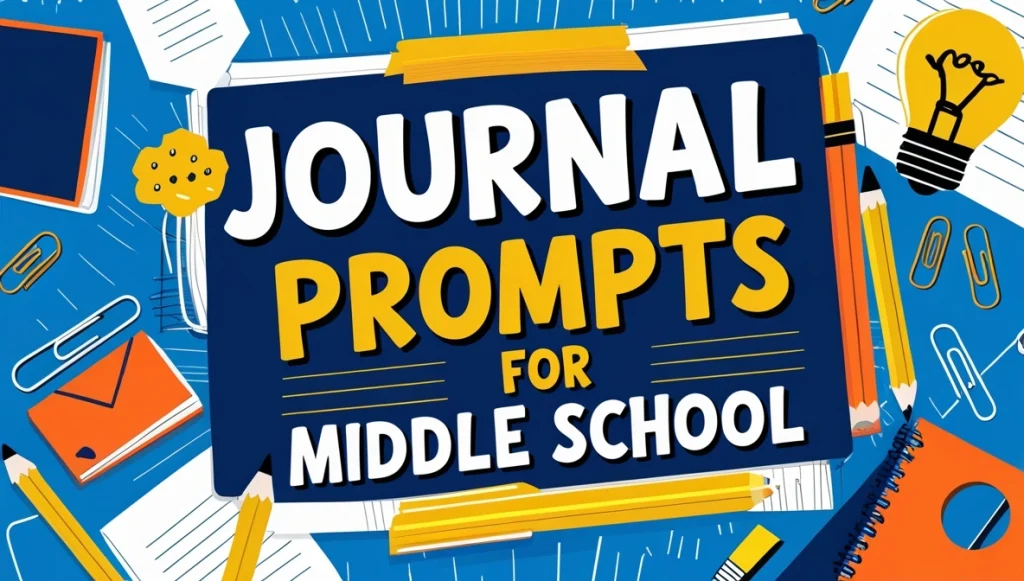
50 Journal Prompts for Middle School: Inspire Young Writers Daily
Middle school is a time of major transition. Students are not only growing physically and academically but also emotionally and socially. This makes it the perfect time to introduce them to the power of journaling. With the right journal prompts for middle school, writing becomes a gateway to self-expression, creativity, and reflection.
Whether you’re a teacher looking for warm-up activities, a parent wanting to support writing at home, or a student ready to explore your thoughts—this list of 100 unique prompts will inspire middle schoolers to write every day with curiosity and confidence.
Contents
Why Use Journal Prompts for Middle School?
Journaling is more than just writing for a grade—it’s personal, creative, and therapeutic. Using structured yet open-ended journal prompts for middle school encourages students to think beyond the textbook and connect with their inner thoughts.
Benefits include:
- Improved writing fluency through regular, low-pressure practice
- Better emotional awareness by writing about personal experiences
- Enhanced imagination through creative storytelling
- Development of a personal voice and critical thinking
- Stronger communication skills in all subjects
By writing daily, middle schoolers learn how to articulate thoughts clearly, explore new perspectives, and develop a lifelong skill in self-expression.
How to Use These Prompts
These writing prompts are perfect for:
- Morning journal time in the classroom
- Homework assignments
- After-school writing activities
- Creative writing clubs
- Reflective writing before exams or breaks
You don’t need to write a full essay every time. Even just a few paragraphs or bullet points can spark valuable thinking and expression. The goal is consistency, not perfection.
50 Journal Prompts for Middle School
Here’s a comprehensive list of engaging prompts that range from fun and imaginative to personal and thought-provoking:
Self-Reflection & Emotions
- What are three things you’re proud of?
- How do you handle stress or pressure?
- Write about a time you felt truly happy.
- What’s your biggest fear, and why?
- What do you do when you’re feeling overwhelmed?
- Describe your ideal day.
- Write about something that made you laugh out loud.
- What’s one thing you want to improve about yourself?
- What motivates you to try harder?
- What’s your personal motto?
Friendships & Relationships
- What makes a good friend?
- Have you ever had a disagreement with a friend? What happened?
- How do you show kindness to others?
- Write about someone who inspires you.
- Describe your relationship with your siblings or cousins.
- What qualities do you value in a friend?
- Write about a time you helped someone.
- Who do you admire and why?
- If you could trade lives with a friend for a day, who would it be?
- What’s the most fun thing you’ve done with a friend?
Creative & Imaginative
- If animals could talk, what would they say?
- Invent your own holiday—what would it be like?
- What would you do if you could fly for one day?
- Write a story that begins with, “I never expected to find that behind the door…”
- Imagine living on Mars—what would your day look like?
- If your pet could text you, what would the messages say?
- Create a new sport. How is it played?
- If you had a secret talent, what would it be?
- Design your dream school.
- What’s inside a mystery box in your attic?
School Life & Goals
- What’s your favorite subject, and why?
- If you were principal for a day, what would you do?
- What’s the best thing about your school?
- How do you stay organized with schoolwork?
- What do you find challenging in school?
- What would you change about your schedule?
- Describe your favorite classroom experience.
- How do you prepare for a big test?
- What school club would you start?
- What’s one goal you want to achieve this semester?
Fun, Favorites & Future
- What’s your favorite book and why?
- Describe your dream vacation.
- If you could be any character from a movie, who would it be?
- What’s your favorite family tradition?
- Where do you see yourself in 10 years?
- What does success look like to you?
- Write about your favorite video game or app.
- What’s your favorite meal and who makes it best?
- Describe your ideal weekend.
- What’s something you can’t live without?
Tips for Encouraging Daily Writing
Creating a habit of journaling requires a bit of structure, support, and flexibility. Here’s how to help middle schoolers succeed:
- Give choices: Let students pick from a few prompts daily.
- Respect privacy: Don’t force sharing unless they’re comfortable.
- Use journals as warm-ups: Start each class with 5–10 minutes of writing.
- Avoid grading harshly: Focus on participation over punctuation.
- Model journaling: Teachers or parents can join in sometimes.
With the right approach, journal writing can become a peaceful and enjoyable part of each day.
Final Thoughts
These journal prompts for middle school are designed to be more than just writing assignments—they’re invitations to think, imagine, and reflect. Journaling builds the habits of communication, empathy, and creative thinking that middle schoolers need not only in school, but in life.
Start with one prompt a day and watch how students’ voices grow stronger over time. If you’re interested in the emotional benefits of journaling as well, check out these journaling prompts for mental health to support students’ well-being alongside their writing growth.
FAQs
What is the purpose of journal prompts for middle school?
Journal prompts help middle school students express their thoughts, improve writing fluency, explore emotions, and develop creative thinking. They make writing more engaging and less intimidating.
How often should middle schoolers journal?
Ideally, students should journal daily or a few times a week. Consistent journaling builds strong writing habits and improves both academic and personal communication skills.
What types of prompts are best for middle school students?
The best prompts are open-ended, age-appropriate, and engaging. They should include a mix of reflective, creative, imaginative, and personal topics to keep students interested and inspired.
Can journal prompts help with emotional development?
Yes! Journaling gives students a safe space to process feelings, explore their identity, and practice mindfulness. It’s a valuable tool for social-emotional learning (SEL) in middle school education.

David White is a seasoned AI enthusiast and tech writer with over a decade of experience in artificial intelligence and machine learning. Specializing in AI prompts and their applications, David’s insights help users harness the power of AI for creative and practical uses. When not writing, David enjoys exploring the latest in AI research and contributing to online tech communities.